How to Winterize Your Plumbing in Ridgecrest, CA
Learn how to winterize your plumbing in Ridgecrest, CA. Protect pipes, outdoor faucets and water heaters from freezing nights with this simple checklist.
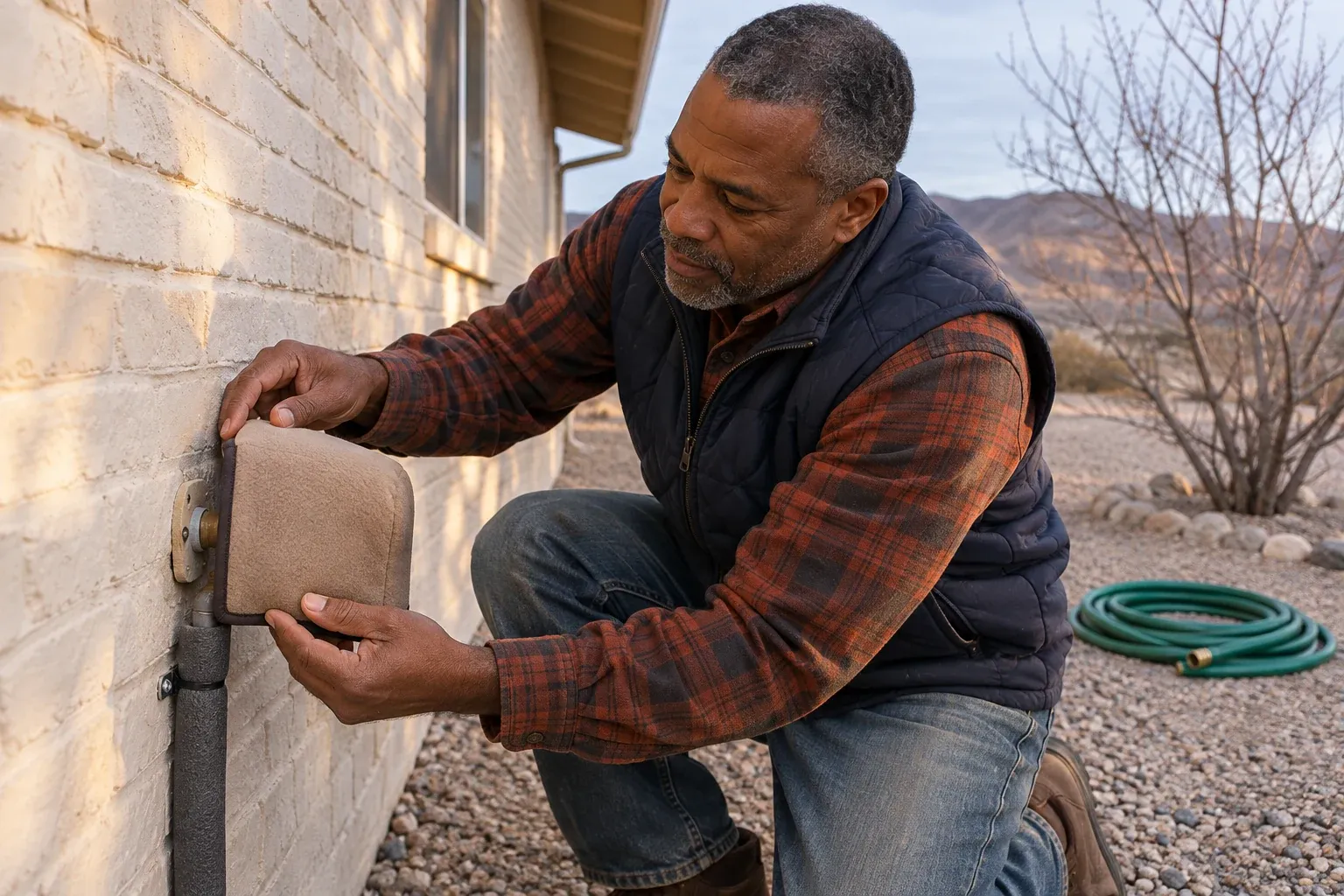
To winterize plumbing in Ridgecrest, CA, insulate exposed pipes, disconnect and cover outdoor faucets, know where your main water shutoff is, keep indoor heat at 55°F or higher, and have your water heater checked before cold nights arrive. Pipes can crack once temperatures fall below 32°F. For help, see our plumbing services or schedule leak detection.
Do pipes freeze in Ridgecrest?
Yes, pipes can freeze in Ridgecrest on cold winter nights. Ridgecrest sits at about 2,289 feet in the high desert, where winter nights can drop to or below freezing even when days are mild. Sunny afternoons give homeowners a false sense of security. Exposed pipes, outdoor faucets and uninsulated garage or crawl space lines are the most at risk when the temperature falls below 32°F.
How do you winterize plumbing before it gets cold?
Winterizing means protecting every exposed part of your plumbing before the first freeze. Use this checklist:
Disconnect garden hoses. Drain them and store them indoors.
Cover outdoor faucets. Install insulated faucet covers, or shut off and drain the line to the hose bib if you have an interior shutoff.
Insulate exposed pipes. Wrap pipes in garages, crawl spaces, attics and exterior walls with foam sleeves.
Find your main water shutoff. Make sure every adult in the home knows where it is and that the valve turns.
Check your water heater. Insulate the tank and nearby pipes, and schedule service if it is aging.
Seal drafts. Close foundation vents and gaps where cold air reaches pipes.
Service sprinklers. Drain the irrigation system and shut off its supply.
What temperature should you keep your house in winter?
Keep your thermostat at 55°F or higher, even when you are away. A steady indoor temperature keeps the pipes inside walls and cabinets above freezing. Lowering the heat too far to save energy can lead to far more costly damage. If you travel for the holidays, ask a neighbor to check on the house and leave the heat on.
How do you protect pipes on very cold nights?
On nights forecast to drop near or below freezing, take a few extra steps to keep pipes warm. Open cabinet doors under sinks on exterior walls so warm air can reach the pipes. Let a faucet drip slowly, since moving water is harder to freeze. Keep garage doors closed and make sure the heat reaches every room.
These small habits are inexpensive and can prevent a burst pipe, which often costs thousands to repair.
What should you do if a pipe freezes?
If a pipe freezes, shut off the main water valve and open the affected faucet to relieve pressure. Warm the pipe gently with a hair dryer or heating pad, working from the faucet toward the frozen section. Never use an open flame, torch or heat gun, because it can damage the pipe and start a fire. If you cannot find or thaw the frozen section, call a plumber right away.
What are the signs of a burst pipe?
A burst pipe may show up as water stains on walls or ceilings, a sudden drop in water pressure, the sound of running water when everything is off, or a spike in your water bill. Once you notice any of these, shut off the main valve and call a plumber. Quick action limits flooding and repair costs. If you suspect a hidden leak, we can help with water line repair in Ridgecrest.
Should you service your water heater before winter?
Yes. Your water heater works hardest in cold months, when incoming water is colder and demand rises. A pre-winter check can catch rust, sediment, leaks and thermostat problems before they leave you without hot water. If your unit is near 10 years old, ask about replacement now rather than during a cold snap. Learn more about water heater repair in Ridgecrest.
What should you do before leaving home for a winter trip?
Before a winter trip, set the thermostat to 55°F or higher, open cabinet doors on exterior walls and shut off the water at the main valve if you will be gone for several days. Turn the water heater to its vacation setting and ask a neighbor to check the house. These steps keep pipes safe and help you avoid returning to a flooded home.
Winterizing Plumbing FAQs for Ridgecrest Homeowners
When should I winterize my plumbing in Ridgecrest?
Winterize before the first cold snap, ideally in late fall. Covering faucets, insulating pipes and servicing the water heater takes only a few hours and costs little compared with repairing a burst pipe. If nights are already near freezing, take the steps this week rather than waiting for a forecast.
At what temperature do pipes freeze?
Water freezes at 32°F, and pipes become at risk when temperatures stay below that level for several hours. Exposed pipes in garages, attics and exterior walls freeze first. Wind and poor insulation make it worse. Protect pipes whenever the forecast shows a night at or below freezing.
Should I let my faucets drip in freezing weather?
Yes. A slow drip from a faucet on an exterior wall relieves pressure and keeps water moving, which helps prevent freezing. Open both the hot and cold sides if the faucet has separate handles. A drip uses very little water compared with the cost of repairing a burst pipe.
How do I cover outdoor faucets for winter?
Disconnect the garden hose, drain the faucet and place an insulated faucet cover over it, pressing it snugly against the wall. If your home has a shutoff valve for the outdoor line, close it and drain the pipe. Do this before the first freeze to avoid cracked fittings.
Where is my main water shutoff valve?
The main shutoff is usually where the water line enters your home, often near the water heater, in a garage, a utility room or outside near the meter. Find it now and test that it turns. If a pipe bursts, shutting this valve quickly can save floors, walls and furniture.
Can I thaw a frozen pipe myself?
You can try a hair dryer or heating pad, working slowly from the faucet toward the frozen section while the faucet stays open. Never use a torch or open flame. If you cannot reach the frozen area, see signs of a crack or find water leaking, shut off the main valve and call a plumber.
Is it safe to leave the heat low while I am away?
It is safe to lower the heat, but keep it at 55°F or higher so pipes stay above freezing. Shutting the heat off completely can lead to frozen and burst pipes that go unnoticed for days. For longer trips, ask someone to check the home or consider shutting off the main water valve.
Do I need to winterize my sprinkler system?
Yes. Water left in sprinkler lines, backflow devices and valves can freeze and crack them. Shut off the water supply to the system and drain it, or have a professional blow out the lines. Insulating exposed backflow devices adds another layer of protection through winter.
How do I know if a pipe has burst behind a wall?
Signs include damp or stained drywall, bubbling paint, a musty smell, falling water pressure or the sound of running water when nothing is on. Shut off the main valve and call a plumber. Professional leak detection can locate the problem without opening more wall than needed.
Does homeowners insurance cover frozen pipe damage?
Many policies cover sudden water damage from a burst pipe, but coverage depends on your plan and whether you took reasonable steps to prevent freezing. Read your policy and talk with your agent. Keeping the heat on and documenting repairs can help if you need to file a claim.
How much does it cost to repair a burst pipe?
Cost varies with the pipe location, the amount of water damage and the repairs needed to walls and floors. A fast response keeps damage lower. Call Pro Construction & Plumbing at 760-264-6212 for a clear, upfront estimate. Our team is open 24 hours and serves Ridgecrest, Searles Valley and Inyokern.
Is pipe insulation worth it in the high desert?
Yes. Foam pipe sleeves are inexpensive and easy to install, and they protect against both freezing and heat loss from hot water lines. They are especially helpful in garages, crawl spaces and along exterior walls, where pipes face the coldest air. Insulation can pay for itself in a single cold snap.
Who can I call for emergency plumbing in Ridgecrest?
Pro Construction & Plumbing offers 24-hour emergency plumbing in Ridgecrest, Searles Valley and Inyokern. Call 760-264-6212 for burst pipes, leaks, water heater failures and other urgent problems. Our licensed, insured team will help you stop the damage and complete the repair.