Signs of Leach Line Failure in Ridgecrest, CA
Slow drains, sewage odors or soggy ground over your drain field? Learn the warning signs of leach line failure in Ridgecrest, CA and exactly what to do next.
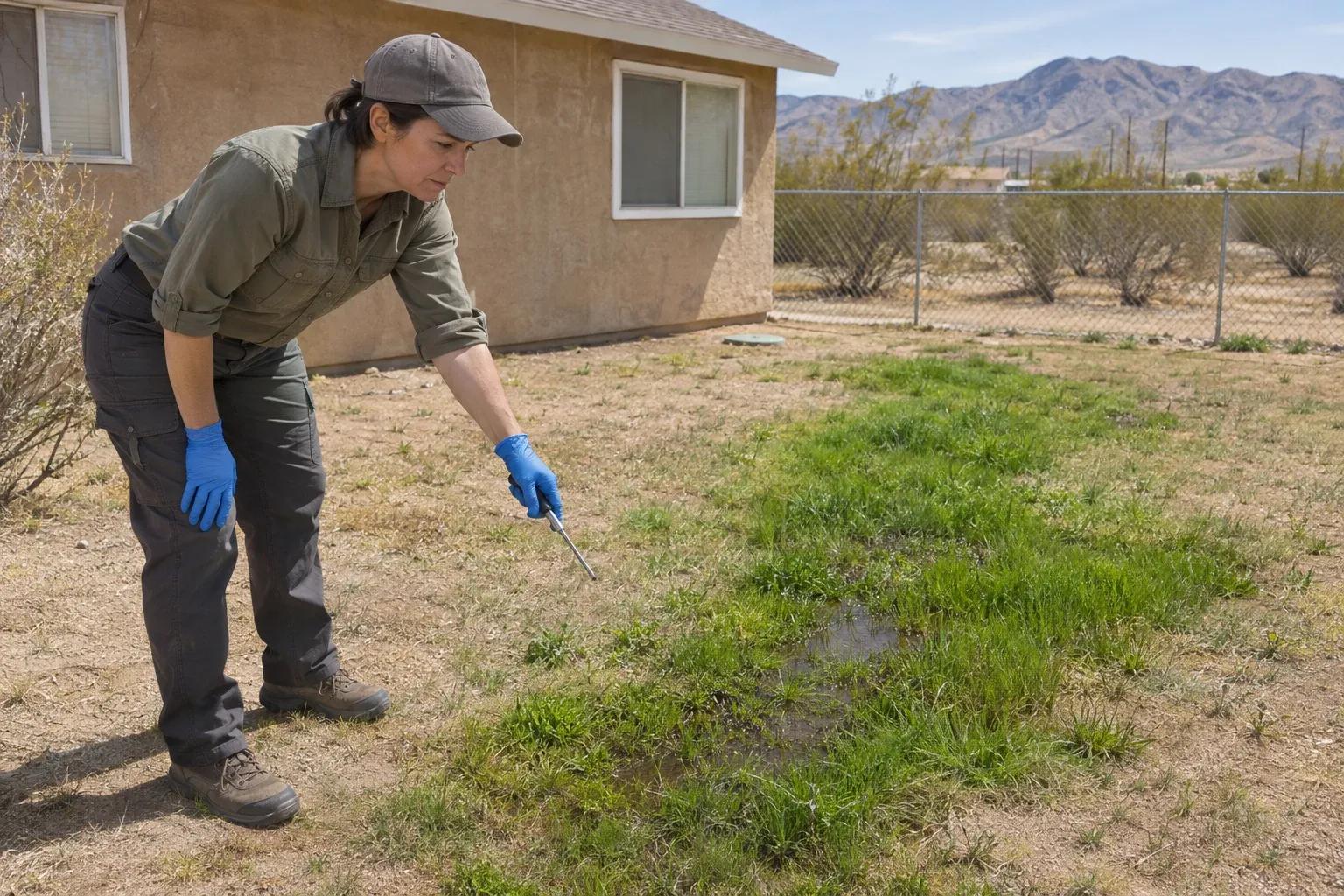
The most common signs of leach line failure in Ridgecrest, CA are slow drains, sewage backups, gurgling pipes, sewage odors, standing water over the drain field and unusually green grass above it. If you notice these symptoms, call a professional right away. Our septic tank and leach line plumbing team can inspect the system, using a sewer camera inspection when needed.
What are the signs of leach line failure?
Leach line failure shows up as slow drainage inside the home and wet, smelly or unusually lush ground outside. Because the drain field is the last stage of a septic system, problems there tend to get worse quickly. Watch for these seven signs:
Slow drains throughout the house. Sinks, tubs and toilets drain slowly even after you clear the individual lines.
Sewage backups. Wastewater rises in the lowest drains, such as a tub or floor drain.
Gurgling pipes. Air trapped in the lines suggests the system cannot move water out.
Sewage odor. A rotten-egg smell near the tank, drain field or inside the house is a red flag.
Standing water or soggy soil. Wet spots over the drain field mean wastewater is not soaking in.
Unusually green grass. A lush, fast-growing strip above the lines can mean effluent is reaching the surface.
Black slime or dark sludge. Dark, greasy buildup in the soil points to untreated wastewater.
Two or more of these signs together deserve a professional inspection.
What causes leach lines to fail?
Leach lines usually fail because the soil can no longer absorb wastewater. Common causes include solids that escape an overfull septic tank and clog the drain field, years of grease and soap buildup, tree roots entering the pipes, crushed or collapsed lines, and soil compaction from vehicles driving over the field.
A system that has not been pumped on schedule is the most frequent culprit. Heavy water use, such as many loads of laundry on one day, can also overwhelm a field that is already struggling.
How often should a septic tank be inspected and pumped?
The EPA recommends inspecting a septic system at least every three years and pumping the tank about every three to five years. Households with a garbage disposal, a large family or heavy water use may need to pump more often. Regular pumping keeps solids out of the leach lines, which is the best way to protect the drain field and avoid costly repairs.
How long do leach lines last?
A well-maintained leach field can last for decades, and some systems reach 50 years. Lifespan depends on soil type, how often the tank is pumped, household water use and what goes down the drain. Keeping fats, wipes and chemicals out of the system and spreading laundry across the week all help the drain field last longer.
Can a failing leach field be repaired?
Sometimes. Minor problems, such as a clogged line or a damaged distribution box, can often be repaired without replacing the whole field. When the soil is saturated or the lines have collapsed, part or all of the drain field may need replacement. Published estimates for repairs range from a couple thousand dollars to well over ten thousand, depending on the damage. An inspection tells you which path fits.
What should you do if you suspect leach line failure?
Act quickly to limit damage and protect your family. Follow these steps:
Reduce water use. Postpone laundry and long showers to ease the load on the system.
Stay off the drain field. Keep people, pets and vehicles away from wet areas.
Do not use chemical drain cleaners. They can harm the bacteria your septic system relies on.
Call a professional. Schedule an inspection to find the source of the problem.
Keep records. Note when symptoms began and the date of the last pumping.
How does a plumber diagnose a leach line problem?
A plumber starts by checking the tank level, the inlet and outlet baffles and the distribution box. A camera inspection then shows the condition of the lines, including cracks, roots and blockages, without digging up the yard. You receive clear findings and options before any repair begins.
For related problems, see our drain cleaning in Ridgecrest page or call our 24-hour team.
Leach Line FAQs for Ridgecrest Homeowners
What does a failing leach field smell like?
A failing leach field often smells like sewage or rotten eggs, especially near the drain field, the septic tank or low drains in the house. The odor means wastewater is not being treated in the soil. Strong smells outdoors after rain or heavy water use are a good reason to schedule an inspection.
Why is the grass greener over my septic drain field?
Greener, faster-growing grass over the drain field usually means wastewater is rising near the surface and feeding the lawn. Healthy fields keep effluent below ground. A lush strip with soggy soil, odor or slow drains points to a leach line problem, so have the system checked.
Why are all my drains slow at once?
When every drain slows down together, the issue is usually farther down the line than a single clog. A full septic tank or a failing leach field can back up the whole system. Pumping the tank sometimes helps, but if the slowdown returns quickly, the drain field may be the cause.
Is a septic backup an emergency?
Yes. Sewage backing up into your home is a health hazard and can damage floors and walls. Stop using water, keep family and pets away from the affected area and call a 24-hour plumber. Do not try to clean raw sewage without protection, and avoid chemical cleaners.
How often should I pump my septic tank?
Most homes should pump about every three to five years, based on EPA guidance, and have the system inspected at least every three years. Larger households or homes with a garbage disposal may need more frequent pumping. Regular service keeps solids out of the leach lines and extends system life.
Can tree roots damage leach lines?
Yes. Roots seek out moisture and nutrients and can grow into leach lines and distribution boxes, causing blockages and cracks. Keep large trees and shrubs away from the drain field, and have a camera inspection if you see recurring clogs. Removing roots early can prevent a full field replacement.
Can I drive or park over my leach field?
No. Vehicles and heavy equipment compact the soil and can crush pipes, which stops the field from absorbing water. Keep driveways, patios and sheds off the drain field. If you are planning a landscaping project, have your system located first so contractors avoid the lines.
Will additives or chemical cleaners fix a failing leach field?
No. Septic additives and chemical drain cleaners do not repair a failing drain field, and some can harm the helpful bacteria in your tank. The fix is physical, such as pumping, cleaning, repairing damaged lines or replacing part of the field. A professional inspection identifies which one you need.
How much does leach line repair cost?
Cost depends on whether you need a simple line repair or part of the drain field replaced. Published estimates range from a couple thousand dollars to over ten thousand. Our team provides a clear estimate after inspecting the system, so you know the scope and price before any work starts.
Do you offer septic and leach line service in Ridgecrest?
Yes. Pro Construction & Plumbing offers septic tank and leach line plumbing for homes in Ridgecrest, Searles Valley and Inyokern, with 24-hour availability. Call 760-264-6212 to schedule an inspection. Our licensed, insured team will explain what is happening and recommend a clear, practical solution.
What should I avoid flushing or pouring down the drain?
Avoid wipes, paper towels, feminine products, grease, coffee grounds, paint and harsh chemicals. These items clog the tank and leach lines or harm the bacteria that treat waste. Use only toilet paper and normal household wastewater, and scrape fats into the trash rather than the sink.
How do I find my septic tank and leach field?
Check your property records or the original permit for a system diagram, or look for access lids and slight ground changes in the yard. If you cannot find it, a plumber can locate the tank and lines with a camera or locator equipment. Knowing where they are helps you protect them.
Can a leach field recover on its own?
Sometimes a resting period and reduced water use can help a stressed field recover, but a truly failed drain field rarely fixes itself. Ignoring symptoms usually lets the problem spread and raises repair costs. If signs continue after you cut back on water, schedule an inspection.